By Marko Kiers on Dec 10, 2025
Scale ups and startups often struggle to set a clear (commercial) direction and strategy. The effort itself can feel tedious and time consuming when there is no simple structure to guide the process. In early phases, strategic planning can feel "too corporate". But is that correct?
Over the years I have used many strategic planning frameworks (OKRs, "Working backwards Method"/AWS, McKinsey 7S etc.), but I have find none other than Salesforce's V2MOM model easier to use. Its focused, structured, and lightweight enough to write down quickly.
V2MOM provides the context (Vision/Values) and de-risking (Obstacles) that OKRs sometimes lack. Its a well structured, complete full strategic framework rather than just a goal-setting tool. It can be used as an excellent Go-To-Market (GTM) strategy framework.
In my opinion: V2MOM is the ideal strategic planning tool for scale and startups.
Download a free V2MOM pdf guide
The background story
The V2MOM model is not new, it comes from Salesforce. Marc Benioff, Salesforce's founder and CEO, ran into the tedious nature of strategic planning early in his career. This led him to create the first version of the V2MOM framework as a practical way to bring clarity and focus to new initiatives (even before founding Salesforce in 1999).
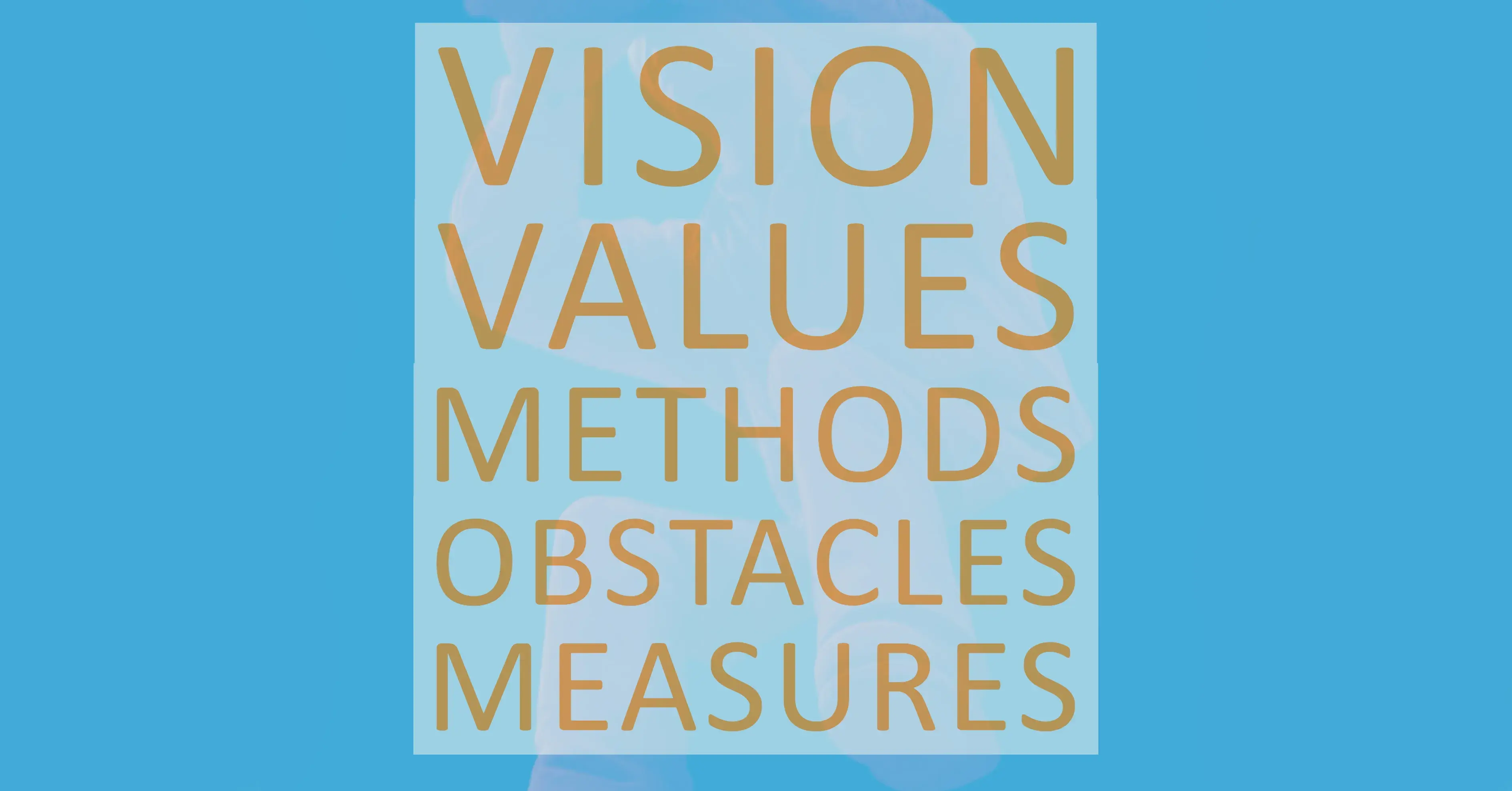
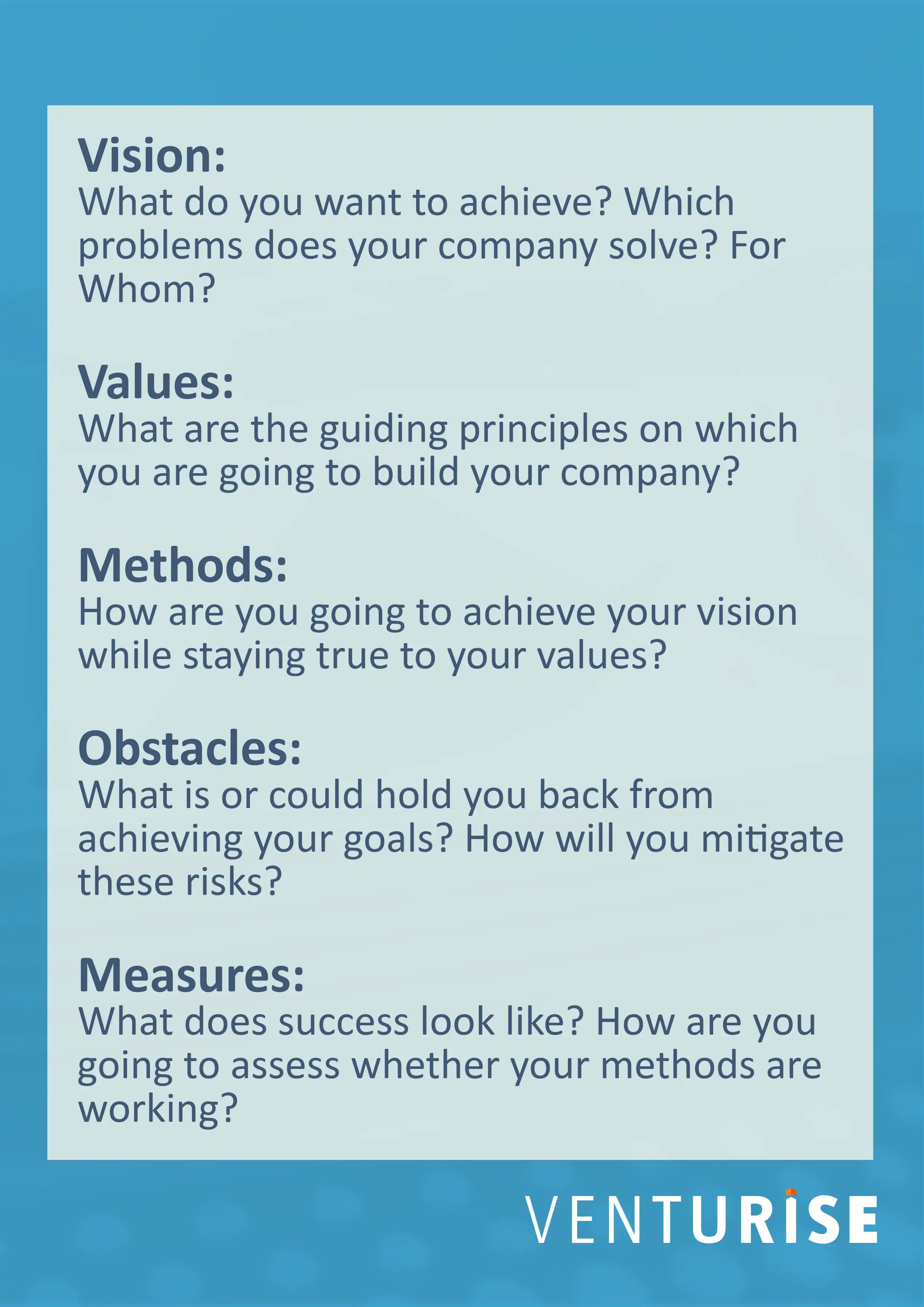
V2MOM stands for Vision, Values, Methods, Obstacles, Measures.
When Salesforce was founded (in 1999), the framework was refined and quickly became the way early teams aligned on what mattered most. Its strength is its simplicity and flexibility: you can just as easily use it as a framework for your own personal development and priority setting.
Even tough its still used today by Salesforce extensively (in a corporate environment), its roots lay in its startup phase. As a Go-To-Market and Strategic planning framework, it's successful for deployment in companies of all sizes.
What is the V2MOM model and how to use it?
As mentioned, V2MOM stands for Vision, Values, Methods, Obstacles, Measures. The combination of both a vision definition and the guiding principles of how that vision needs to be achieved is a strong differentiation from other strategic planning tools. The model relates well with the "start with why" narrative, which seems to be lacking in many other models. In addition the model adds obstacle handling a key lever to influence growth. Lets dive into each of the attributes of the V2MOM model and how to use it.
I will give a detailed explanation, including examples, about each of the building blocks later in this article.
Vision: your longer term goal
When you start working with the V2MOM model, writing down a clear Vision is your starting point. Its your companies "North Star". It describes the future state you are aiming for, not the tasks you will do tomorrow. For a startup, this is the simple answer to the question: “What are we really trying to build and why does it matter?”. A good vision is ambitious, concrete enough to guide decisions, and realistic enough to be achieved over a longer time frame (a year or more from now).
A vision should be bold and ambitious; it should not be a comfortable goal. When drafting your vision, it also helps to make it specific about who you serve and what changes for them when you succeed. Strong visions are easy to repeat, understandable for anyone in the company, and inspiring enough that people want to contribute to making it real.
When drafting your Vision, ask yourself the following questions:- Would a new hire remember it after one read?
- Does it stay true if your product changes?
- Does it avoid promises you can’t control?
- Does it clearly imply who it’s for and why you exist?
A vision should not be mixed up with other elements of the the V2MOM, such as Methods or Measures. Those come in later. In general, "less is more". If your vision is too long, probably you've mixed it up with other elements of the V2MOM model.
Let's consider a new startup that is developing an AI software product to drastically simplify the due diligence process during VC investment rounds. In this case an example vision could be:
| Vision | To become the default AI decision engine for private-market due diligence, enabling investment teams to decide faster, at lower cost, with clearer evidence and fewer blind spots |
Generally, the Vision component of a V2MOM is intended to be a clear, inspiring, and aspirational statement of the desired future state or ultimate destination. While a financial goal could be part of a company's ultimate destination, it is more common and often better practice to place specific, quantifiable financial targets in the Measures section.
Values: the principles that guide how you achieve your vision
Many startups know what they want to achieve, but without shared principles, execution becomes inconsistent.
As your companies vision, these shared principles (your values) lay the groundwork for your companies identity. Your Values determine how your business will act in certain scenarios and creates an emotional connection with your audience. They set expectations for behavior, communication and accountability without requiring heavy processes. They are not abstract words on a wall but practical guides for how your people should make decisions, work together and respond under pressure.
Values also help resolve one of the biggest challenges in young organizations: maintaining alignment when teams expand, new people join and plans inevitably change.
Typically, up to 7 values will be defined. More than that starts to create overlap and creates less focus within the set of principles that should guardrail your vision.
For the earlier described hypothetical company that aims to aims to become the default AI decision making engine for private market due diligence, here are a set of seven values:
| Values | Explanation |
| Diverse teams make better decisions | We actively build a workforce with different backgrounds, perspectives and experiences. Diversity strengthens our thinking, improves our product and reflects the markets we serve. |
| Clarity over complexity | We believe investment decisions should be based on evidence, not noise. We reduce complexity and present insight in a way that teams can trust and act on immediately. |
| Integrity in every conclusion | Our analysis must be honest, transparent and defensible. We do not bend data to fit a story. We let the facts speak, even when they challenge assumptions. |
| Rigour at speed | Moving fast is only valuable when the work is sound. We combine rapid execution with high analytical standards so that deal teams get both accuracy and efficiency. |
| Respect for the craft of investing | We build tools that support, not replace, human judgment. Our role is to elevate the work of partners, managers and analysts by giving them deeper insight, not shortcuts. |
| Collaboration with our users | The best product comes from listening closely to the people who depend on it. We work with investors, founders and advisors as partners in shaping better due diligence. |
| Confidentiality without compromise | We protect information as if every dataset were our own. Trust is the core currency of private markets, and we safeguard it at every step. |
Methods: Turning Vision Into Action
Methods describe how your company will achieve its Vision while staying true to its Values. Here intentions are turned into real action. Your methods are the deliberate choices about the approaches, systems and priorities that will translate your strategy into forward motion for the company.
Methods tell you how to get the job done.
The methods section probably has the strongest overlap with the OKR model, in which Organizational Key Results are defined. The V2MOM model puts a stronger focus on defining a clear vision and setting values before diving into the actual actions that need to take place. This is one of the reasons, why I prefer the V2MOM model; it sets a stronger foundation.
Your Methods can be augmented by defining them in a SMART way. This in itself is a model that is widely used for the clearest possible definition of goals. SMART stands for Specific, Measurable, Achievable, Relevant and Time-bound. In the more detailed Measures section, its absolutely necessary to define your points in a SMART way to create accountability and a clear baseline for defining success.
Concerning financial goals, it's good to keep in mind the Methods generate the revenue, and the Measures prove you've done it successfully.
For the earlier used hypothetical AI due diligence software company, a set of methods could be:
| Method | SMART Explanation |
| Build a trusted and revenue generating AI analysis engine | Release an explainable AI model for company assessments, with audit trails for all conclusions, with €2M ARR, profitable, by the end of Q2 2026 |
| Create a structured workflow for deal teams | Launch a guided diligence workflow used end-to-end by at least three pilot funds within three months. |
| Partner closely with early users | Run biweekly feedback sessions with five investment teams and incorporate top insights into monthly product releases. |
| Strengthen data governance and security | Achieve SOC 2 readiness by Q2 and enforce strict access controls for all uploaded materials. |
| Integrate with existing tools | Deliver two core integrations, one Virtual Data Room (VDR) and one leading Customer Resource Management (CRM) platform, by the end of Q3 to support smoother onboarding |
Obstacles: What Could or Is Holding You Back?
In the V2MOM model, next in line are the Obstacles that could be in the way now or in the future of achieving your goals. (These Obstacles can also be written down as the last item in the model. This is often done to better align the Methods with the Measures in one flow.)
Obstacles require scenario planning and often refer to potential competition. They make leadership think of "what could happen if". The obstacles section is one of the reasons why the V2MOM model fits the start and scale-up world so well (and makes it better than other models for this usage). It forces people to think not only about what is holding you back today, but also about what could happen in the future that would stop you from reaching your goals.
For the hypothetical AI due diligence software company used earlier, a set of obstacles could be:
| Obstacles | Explanation |
| Limited access to high-quality and diverse datasets | Without sufficient training data or real-world examples, the AI model may lack accuracy, context or the ability to generalise across industries and deal types. |
| Investor hesitation to trust AI in critical decisions | VC, PE and M&A teams may resist automated analysis without strong transparency, explainability and audit trails, slowing early adoption. |
| Rapid advances in general AI platforms | Large AI providers (i.e. Anthropic, OpenAI) may quickly expand into specialized due-diligence capabilities, reducing differentiation or compressing the window for defensible advantage. |
| Virtual Data Room providers moving up the value chain | VDR companies may layer automated insights, risk scoring or analytics on top of their document storage tools, creating competition from incumbent platforms with large user bases. |
| Complex integration requirements with external systems | Different formats, APIs and security rules across CRMs, data rooms and portfolio systems can slow product delivery and hinder seamless workflows. |
| Regulatory and compliance burdens in handling confidential data | Strict rules around data security, access control and retention may increase implementation complexity and delay onboarding for institutional investors. |
Measures: Defining What Success Must Look Like
Your measures are strongly related to your defined Methods and translate them into outcomes that can be observed, tested and proven.
In a V2MOM, your methods form the backbone of accountability: if the Measures are being met, the strategy is advancing; if not, the company knows where to look and what to adjust.
As with the shorter explanations of your Methods, your Measures section should be Specific, Measurable, Achievable, Relevant and Time-bound (SMART).
A set of Measures, that are related to the earlier defined Methods of the hypothetical AI due diligence software company could look like the following table (3rd column). For the sake of explanation, we've created a limited set of Measures per method. In reality, your Measures should contain between 3 and 10 per method:
| Method | SMART Explanation of Method | SMART Measures |
| Build a trusted, and revenue generating AI analysis engine | Release an explainable AI model for company assessments, with audit trails for all conclusions, with €2M ARR, profitable, by the end of Q2 2026 |
|
| Create a structured workflow for deal teams | Launch a guided diligence workflow used end-to-end by at least three pilot funds within three months. |
|
| Partner closely with early users | Run biweekly feedback sessions with five investment teams and incorporate top insights into monthly product releases. |
|
| Strengthen data governance and security | Achieve SOC 2 readiness by Q2 and enforce strict access controls for all uploaded materials. |
|
| Integrate with existing tools | Deliver two core integrations, one Virtual Data Room (VDR) and one leading Customer Resource Management (CRM) platform, by the end of Q3 to support smoother onboarding |
|
Which tooling can be used to write down your V2MOM and track progress?
Writing down your V2MOM can be as simple as putting it in a Microsoft Word or Google Document. However, to keep people accountable, share actions and track progress regularly, other software exists that can be beneficial.
Salesforce itself mostly used quip to write down and distribute V2MOM's. Nowadays, quip's technology is part of Slack Canvas. So, if you have Slack you might want to check out Slack Canvas.
But, great alternatives exist. First of all, there is a dedicated tool that enables you to track a V2MOM throughout the organization in a structured fashion with automated check-ins and approval processes. Check out V2MOM.io to test it in a free trial. It includes key integrations with Slack and Teams (i.e. for approvals of the V2MOMs)
Microsoft Loop is another tool for writing down a V2MOM and track progress and accountability over time. The layout and setup of Loop are very straightforward and easy to understand.
Monday and and Asana can be used as tools as well to structure and share your V2MOM. If you require more sophisticated Methods and Measures and architect detailed plans and track progress, a project planning tool such as Microsoft Planner can be beneficial.
- V2MOM.io - Dedicated tool to track V2MOM's across the organization. Easy to use, web-based and comes with key integrations such as Slack and Teams. Great to track progress over time and get a full overview of the overall status (visually in an org-chart)
- Microsoft Loop - Lightweight & easy to use. Strong integration within Microsoft portfolio. No project planning features, so not suitable for in depth Measures and bigger, detailed projects. To overcome this gap, you can link a Microsoft Planner component in Loop
- Microsoft Planner - If you require more sophisticated Planning and Measures. Strong integration within Microsoft portfolio.
- Quip, or nowadays Slack Canvas - Great if your team is working with Slack already. Needs a bit more work to setup the right V2MOM structure compared to Loop. Lightweight, no project planning features, but great for collaboration.
- Monday - Strong for visual execution. Easy progress tracking, dashboards, and color coding
- Asana - A mature project management tool. Strong for structuring work and collaboration.
Final Steps in bringing your V2MOM to life
Putting a V2MOM in place is not the end of the process but the beginning of clarity. Once the Vision, Values, Methods, Obstacles and Measures are defined, the work shifts to communicating them clearly and embedding them into daily decisions. Sharing your V2MOM and the status of the Measures is essential to create unity in your strategic approach. Your V2MOM is not set in stone, it should be a living document.
For Scale-ups, creating departmental V2MOMs that link the overall strategy to specific Product, Financial, Sales, Service goals etc. could be a good way to create focus and alignment at the same time. In fact, this is how the V2MOM model is used to create alignment at Salesforce, down to the individual employee.
If you need support using the V2MOM model as your Go To Market (GTM) compass: Venturise can help you build a one-page plan that is sharp, actionable and aligned with your growth goals

Seven Steps to Align Sales Compensation With Your Growth Strategy

Scaling Faster, Together: Turning Partnerships into Growth Multipliers